
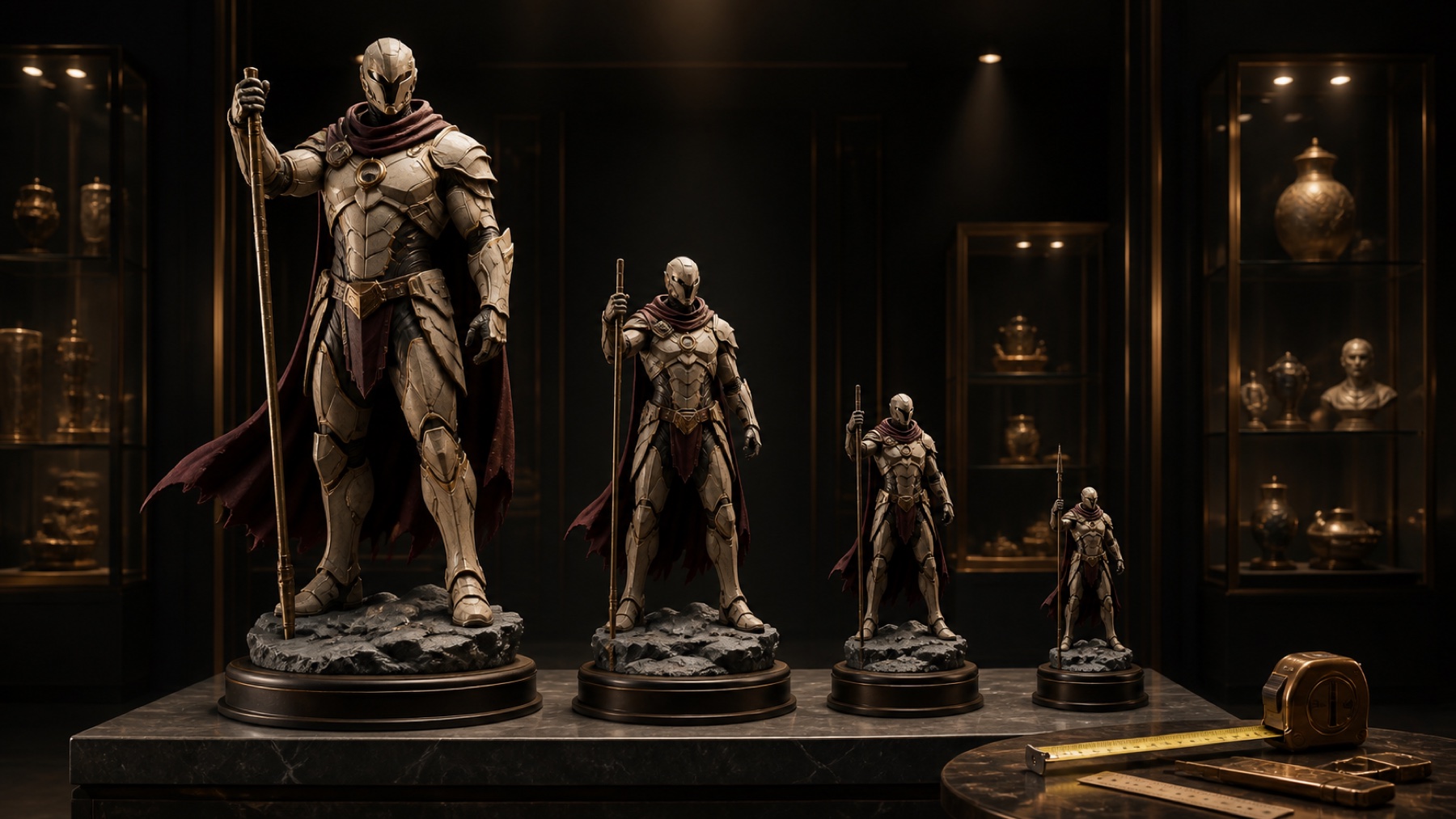
A collectible's scale is a ratio, not a promise about the size of its shipping box, base or final pose. This diecast figure scale guide explains what 1:6, 1:10, 1:12 and quarter scale mean in practical terms, then shows how to use the ratio without buying a centerpiece that overwhelms its cabinet—or a companion figure that looks wrong beside the rest of the collection.
For a nominal six-foot character, the simple reference heights are 18 inches at 1:4, 12 inches at 1:6, 7.2 inches at 1:10 and 6 inches at 1:12. Those numbers describe the subject, not necessarily the finished collectible. A crouch lowers it. A raised weapon, wing or scenic base makes it taller. Stylized anatomy, armor, hair and headwear change the result again. Treat scale as the starting point and the published product dimensions as the purchasing evidence.
Use this guide with the DiecastFigures catalog, current pre-order directory and display-case guide to compare exact pieces before following a retailer link.
How collectible scale ratios work
A ratio such as 1:6 means one unit on the collectible represents six of the same units on the full-size subject. Divide the subject's real dimension by the denominator: a 72-inch person divided by six becomes a nominal 12-inch figure. At 1:10, the same subject becomes 7.2 inches. At 1:12, one inch on the collectible represents one foot on the subject.
Metric and U.S. customary dimensions can be compared after conversion. NIST's conversion guidance uses 2.54 centimeters per inch; keep enough precision for planning, but do not mistake calculated character height for the maker's assembled-product dimensions. A manufacturer may quote the top of a helmet, the tip of a weapon or the highest point of a base. Product pages can also label measurements approximate.
The quickest useful formula is: full-size dimension ÷ scale denominator = nominal collectible dimension. The safer buying rule is: use that result to understand the category, then reserve cabinet space from the official assembled height, width and depth.
What 1:6 scale figures need in real space
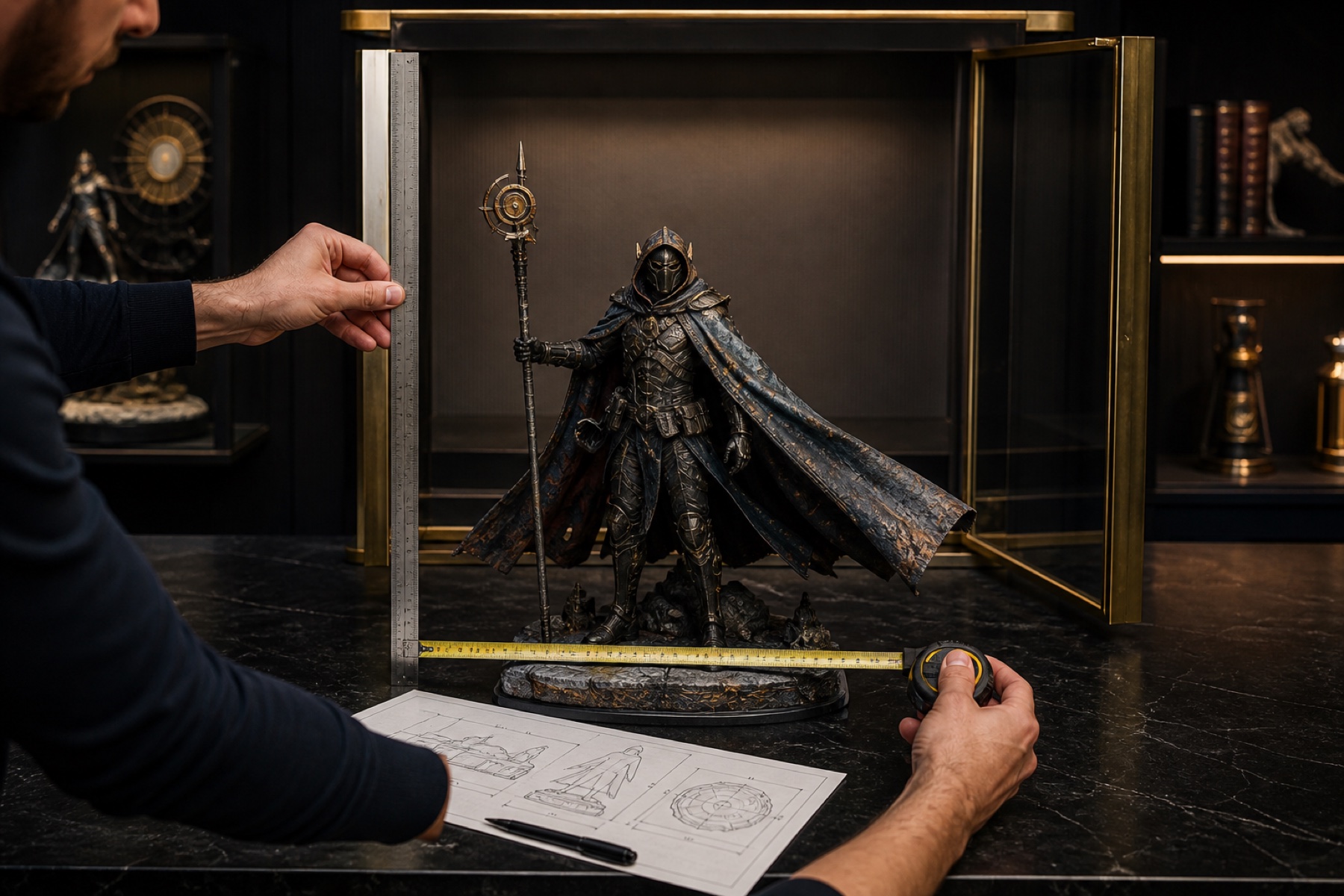
For a six-foot human, 1:6 scale works out to roughly 12 inches before footwear, headwear or a stand. Sixth-scale figures often add tailored clothing, alternate hands, weapons and a support base. Sideshow's history of its Star Wars collectibles describes sixth-scale releases as poseable, costumed figures and notes that character height varies—Yoda and General Grievous are an obvious reminder that “sixth scale” does not mean every box contains a 12-inch body.
The Hot Toys Ahsoka Tano Sixth Scale Figure is a useful catalog example. The exact-product destination is also available at Sideshow Store. Before placing any sixth-scale order, account for the display base, bent elbows, wide stances, layered fabric and the longest accessory you intend to install. A dynamic pose can consume more width and depth than a neutral museum stance.
Collectors building a one-sixth display should also leave working room for posing. Fingers, wrist pegs and costume layers should not be forced against glass. If the cabinet door cannot open far enough to insert the fully assembled figure safely, the internal measurement is not the only constraint.
Why 1:10 scale statues are compact but not small
A six-foot subject converts to 7.2 inches at 1:10, but the statue's base and composition can easily push the finished height into the 9-to-14-inch range. Iron Studios' Art Scale line frequently uses scenic bases, action poses and environmental elements; that presentation is why one-tenth statues can carry more visual weight than their ratio suggests.
The Batman Absolute Art Scale 1/10 catalog record links the scale to a specific piece and preserves its official photography. Collectors can confirm current details on the exact Iron Studios product page. Measure the widest cape edge and deepest base point, not only the character's shoulder width.
One-tenth scale is particularly effective for team displays because more characters fit across a shelf than at 1:6 or 1:4. The tradeoff is density: closely packed silhouettes become visual noise, and overlapping weapons increase handling risk. Matching a series, base language and sightline usually produces a stronger display than filling every available inch.
Where 1:12 scale fits—and when it will not match 1:10
At 1:12, a six-foot human is nominally 6 inches tall. The format is common for articulated figures and diorama-compatible characters, but “six-inch figure” and “true 1:12 scale” are not interchangeable claims. A manufacturer may standardize a line around a visual height rather than calculate every character from canonical stature. Large helmets, exaggerated anatomy and thick bases add more variation.
Placing a 1:12 figure beside a 1:10 statue makes the smaller piece about 17 percent shorter before pose and base differences. That can work when the objects occupy separate risers or represent intentionally different formats. It usually looks accidental when both stand shoulder-to-shoulder as if they share one scene.
Use the maker directory to keep product lines together, then compare each record's actual dimensions and images. For a diorama, check vehicles, doors, furniture and miniature people against the same ratio. A character's head may hide a mismatch; a doorway rarely does.
Quarter scale and the true cost of a centerpiece
Quarter scale converts a six-foot person to 18 inches before the base. Finished statues regularly reach well beyond that reference because of weapons, capes, raised arms and environments. Sideshow's scale history describes quarter-scale Premium Format pieces as substantial polystone and mixed-media presentations, while its catalog spans formats from sixth scale to life size.
The Catwoman Purple Edition Quarter Scale Maquette demonstrates why the exact record matters more than the category label. Follow the exact Sideshow Store listing for current retailer-controlled details. For any quarter-scale purchase, verify assembled weight, shelf load rating, door opening, turning clearance and whether a second person is needed for installation.
The financial footprint extends beyond the statue. A deeper cabinet, stronger shelf, insured shipping and retained packaging all need space. Read the premium collectible pre-order checklist before paying a deposit on a large edition.
How to mix scales without making the cabinet look accidental
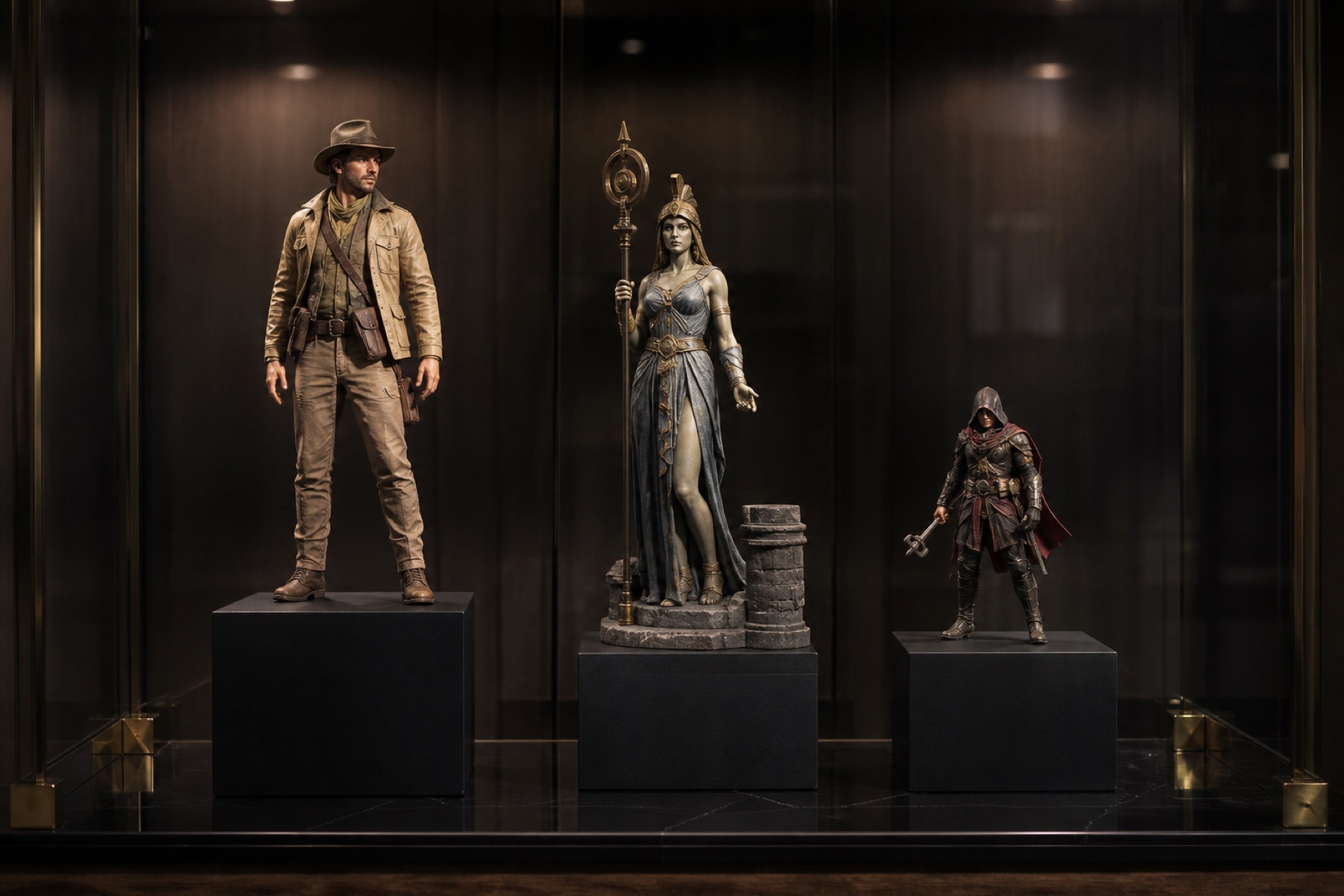
The cleanest collection uses scale as one layer of organization rather than one inflexible rule. Keep a single scene or character lineup at one ratio. Separate other scales by shelf, cabinet bay, franchise or material. Use restrained risers to align sightlines, but do not elevate a small figure until its head matches a larger scale and pretend the bodies now belong together.
Repeat visual cues: similar base colors, balanced pools of light and consistent spacing can unify different formats. Give the largest piece a clear focal position. Group smaller formats as deliberate ensembles instead of scattering them around unused corners. Photograph a temporary arrangement before committing adhesive lighting or fixed risers; the camera often reveals scale clashes that the eye accepts while arranging.
Measure the collectible's operating envelope before buying
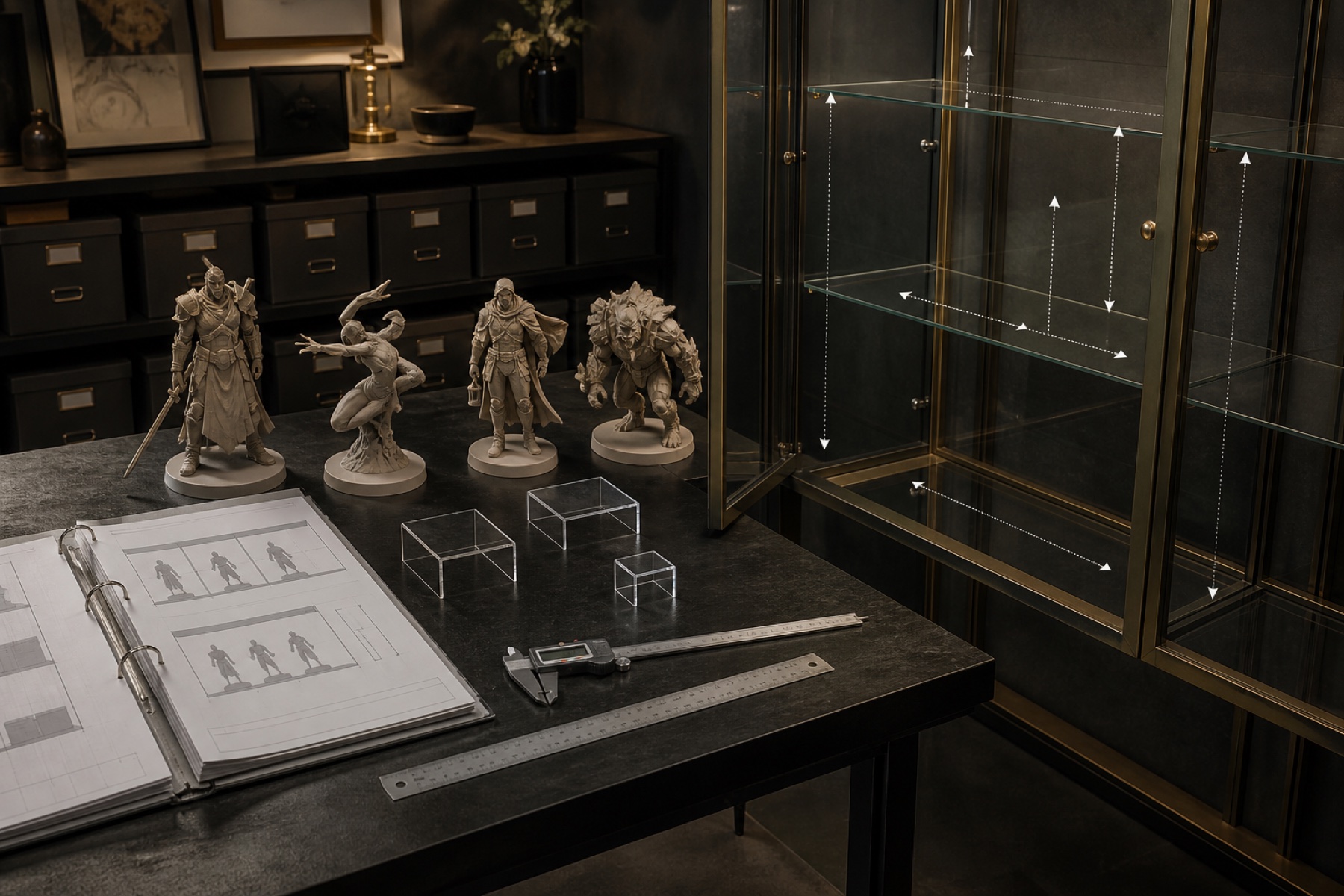
Record four numbers: assembled height, maximum width, maximum depth and weight. Then add the space needed to install or remove the longest accessory. Confirm internal cabinet dimensions, usable door opening and the shelf's documented load capacity. Shipping-box measurements are useful for delivery and storage, but they are not display dimensions.
Also capture the configuration behind each measurement. Alternate portraits, arms, capes and weapons can change the operating envelope. A figure that fits in its museum pose may not fit in the dynamic pose shown in the hero photograph. Keep the source URL and review date because specifications, included parts, price and availability can change.
Scale should help you predict relationships; exact measurements should decide the purchase. When both are recorded, a collector can plan companion pieces, cabinet capacity and future upgrades without guessing from promotional photography.
Some outbound retailer links may be affiliate links, and DiecastFigures may earn a commission from qualifying purchases at no additional cost to the visitor. DiecastFigures does not sell, process payment, ship or fulfill collectibles. Retailers control price, stock, payment, shipping, returns and warranties. Product specifications and availability were reviewed August 21, 2026; confirm the linked source before purchasing.
See an error? Request a correction.