

If you want to know how to preserve collectible statues, start with the display environment—not a bottle of cleaner. Premium resin statues, polystone pieces, mixed-media figures, fabric costumes and hand-painted finishes do not all age in exactly the same way. They do share five avoidable risks: uncontrolled light, unstable heat and humidity, weak shelving, airborne dust and hurried handling.
This guide turns museum preventive-conservation principles into a practical routine for a private collection. It is not a substitute for the manufacturer’s care instructions or advice from a qualified conservator. It is a way to make better decisions before a $1,000 centerpiece becomes a repair project.
Protect resin statues from sunlight and excess display light
Light damage is cumulative. The Library of Congress explains that light can cause permanent fading, yellowing, bleaching, embrittlement and color change, and that dim light over a long period can still add up to damaging exposure. That matters to hand-painted collectible statues because the display is often designed to stay illuminated for hours every day.
Keep the cabinet out of direct sun. A UV-filtering shade or glazing layer can reduce ultraviolet exposure, but it does not make visible light harmless. Use dimmable, low-heat LEDs, place drivers and other heat-producing components outside the case when practical, and turn display lighting off when nobody is viewing the collection. Photograph the piece under consistent neutral light when it arrives, then compare those reference images periodically for fading or finish changes.
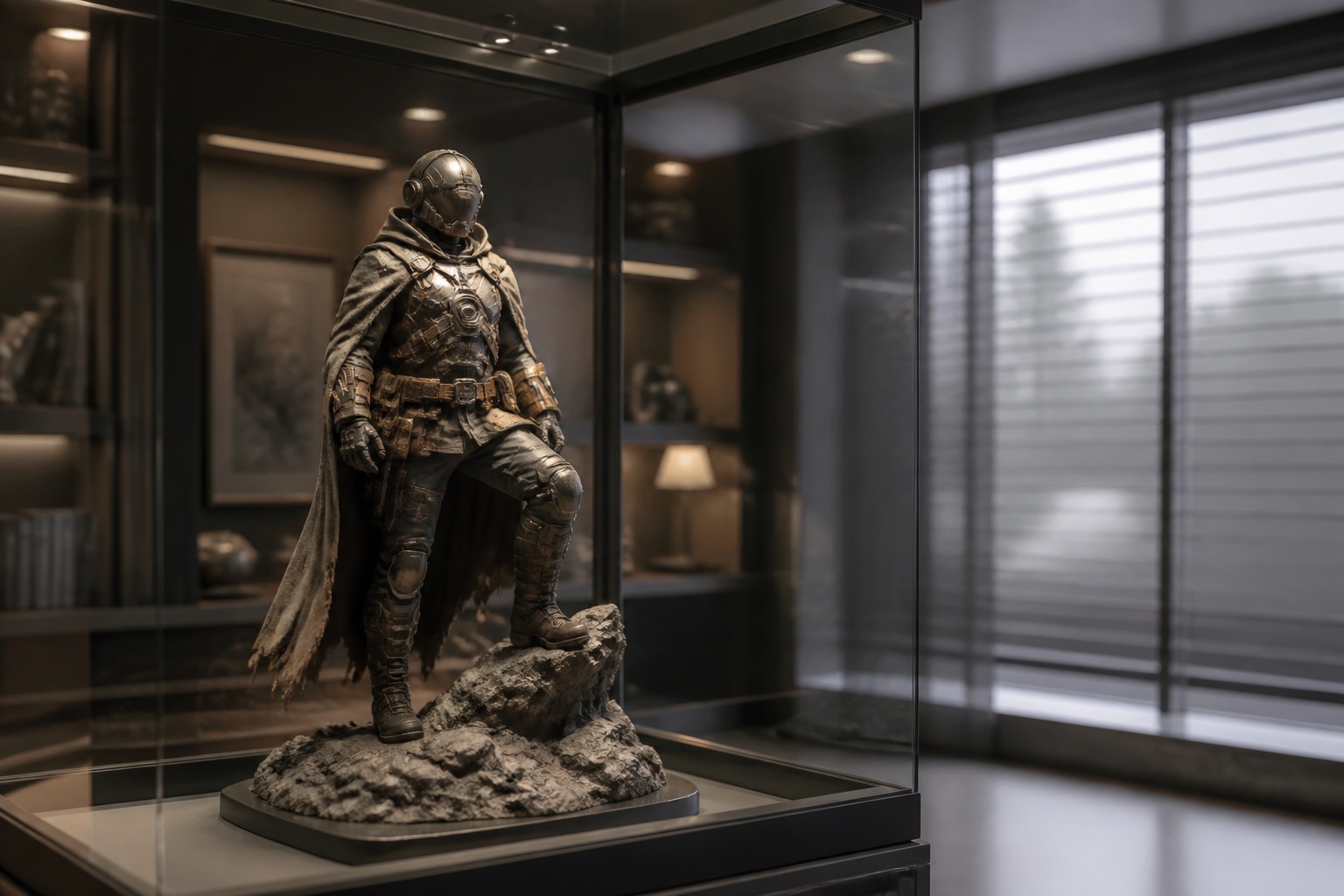
A premium statue display case should control light without turning the collectible into a dark silhouette. Aim for even illumination, limited operating hours and enough ventilation that the light system does not warm the enclosed air.
Monitor collectible statue humidity instead of chasing one perfect number
There is no universal humidity setting for every collectible. The Canadian Conservation Institute describes incorrect relative humidity as several different risks: sustained damp conditions, crossing a material-specific critical value, extreme dryness and damaging fluctuations. A mixed-media statue may combine resin, paint, adhesives, metal, fabric, faux leather and packaging materials, so a single rigid target can imply more certainty than the object’s construction supports.
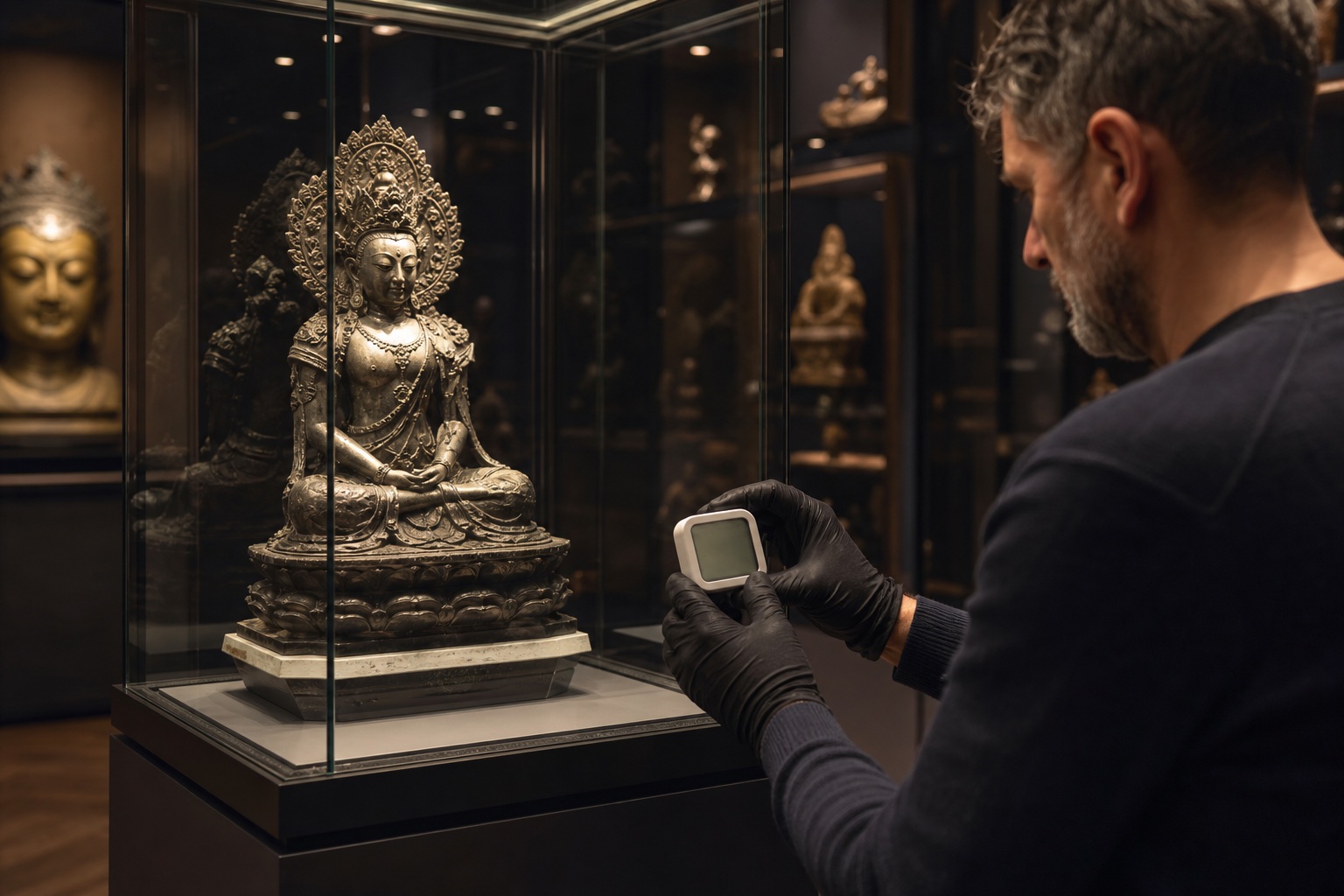
Put a reliable thermo-hygrometer near the collection and record trends rather than reacting to one reading. Watch for seasonal swings, condensation, musty odors, corrosion on metal parts, lifting paint, tacky surfaces, cracked faux leather or movement at glued joints. Avoid placing the cabinet against a damp exterior wall, over a heat register or beside a humidifier. The goal is a stable room without damp extremes—not constant adjustment every time the display case door opens.
The Canadian Conservation Institute’s environmental-monitoring guidance emphasizes that a record of temperature and relative humidity helps identify current conditions and predict future ones. That evidence is more useful than guessing from how the room feels.
Verify shelf load, cabinet clearance and physical stability
The most immediate threat to a heavy statue is often gravity. Use the assembled weight, including alternate parts and the base, and compare it with the cabinet manufacturer’s documented per-shelf load rating. “Tempered glass” describes a type of glass; it is not, by itself, a load rating. If the seller cannot document the shelf capacity, do not make a high-value statue the test weight.
Measure height, width and depth with the widest cape, weapon, wing or effect installed. Add clearance for assembly and removal. A statue that fits only after being tilted around a glass door is not safely accommodated. Place heavier pieces low and centered, level the cabinet, follow its anchoring instructions and keep the display away from busy walkways.
Before reserving another large piece, use the premium collectible pre-order checklist and compare its stated dimensions with your actual cabinet. You can also review current collectible pre-orders before committing display space.
Handle premium statues with a planned two-person routine
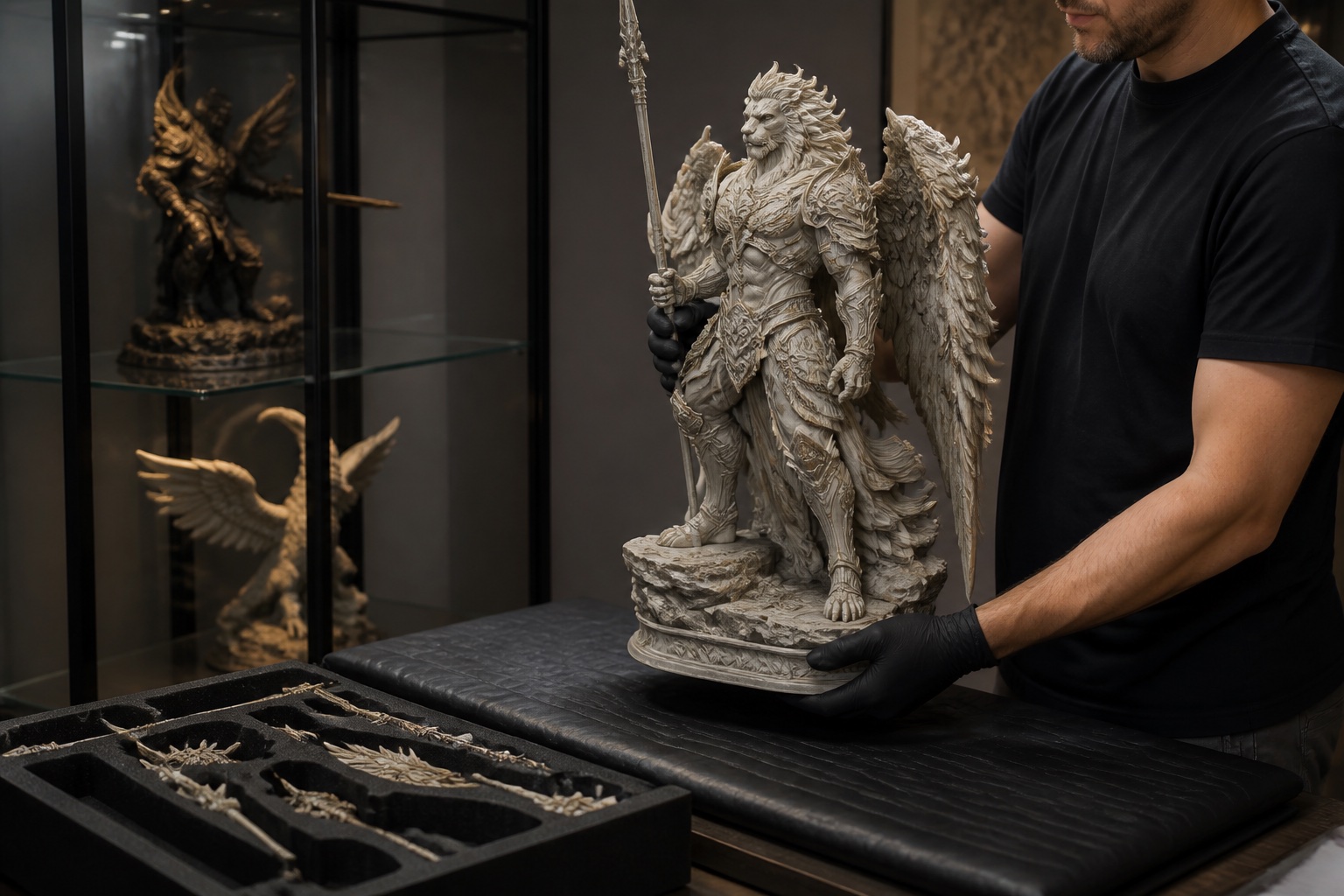
Prepare the destination before touching the statue. Clear a padded table, remove jewelry and watches that can scratch a finish, wash and dry your hands, and consult the manufacturer’s assembly guide. Gloves are not automatically safer: a poorly fitting glove can reduce grip. Use clean nitrile gloves when the surface or manufacturer calls for them, and otherwise prioritize clean hands and secure contact with structurally strong areas.
Lift from the base and main mass, never from a sword, finger, cape tip, wing, hair strand or magnetized accessory. Large or awkward pieces deserve two people: one supports the weight while the other manages doors, cables and removable parts. Photograph each layer during unboxing, label every accessory cavity, and retain the original foam, box and instructions. The packaging is part of the collection’s long-term protection and future transport plan.
Control dust without polishing away the finish
A sealed display cabinet reduces dust; it does not eliminate it. Keep food, smoke, aerosol sprays, scented oils and household cleaners away from the case. For routine cleaning, start with the least aggressive method permitted by the manufacturer: a clean air blower or very soft brush used gently while the piece is supported. Do not apply water, solvents, polish or protective coatings unless the maker explicitly approves them for that exact material and finish.
Clean the cabinet separately so glass cleaner cannot drift onto paint, fabric or metal. Inspect contact points, magnets, batteries and fabric tension while the piece is accessible. If paint becomes sticky, flakes, cracks or changes color, stop experimenting and document the condition before contacting the manufacturer or a qualified conservator.
Build a preservation record for every valuable collectible
Preservation also means protecting the object’s identity. Keep the invoice, product code, edition number, certificate, assembly instructions, parts list, dated photographs and correspondence together. Photograph the front, back, base, edition markings, accessories and any pre-existing flaw. Store a copy away from the collection.
Use the DiecastFigures catalog to identify related releases and missing pieces, but keep your own purchase and condition records. DiecastFigures is a research and discovery site; it does not sell, store, ship or insure collectibles.
The simplest maintenance schedule is the one you will follow: check lighting and room conditions monthly, inspect the statue and cabinet seasonally, and repeat the condition photographs annually. A stable display, careful handling and a documented history will do more for a premium collectible than any last-minute restoration product.
Some display links on DiecastFigures are Amazon affiliate links. As an Amazon Associate, we earn from qualifying purchases. Retailers control price, availability, payment, fulfillment, returns and warranties. Product materials and care requirements vary, so confirm current instructions with the manufacturer before acting.
See an error? Request a correction.